GuidesAfghan calendars
Shamsi vs Miladi: Which Calendar Afghans Use and When
A practical guide to when Afghan Shamsi (Solar Hijri) dates are used versus Miladi dates for documents, travel, school, and daily life.
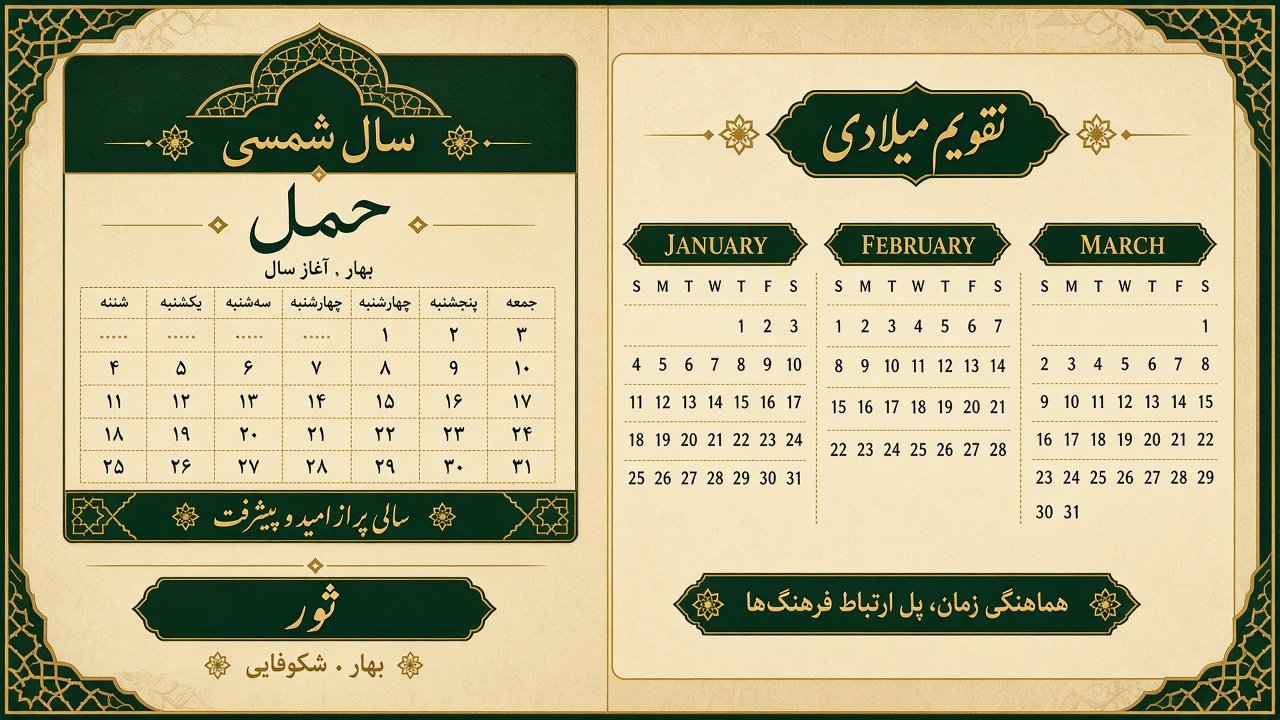
Two calendars in everyday Afghan life
People in Afghanistan and the Afghan diaspora routinely work with more than one calendar. The Afghan Shamsi calendar (Solar Hijri) is the civil calendar used for government offices, schools, and many local records. The Miladi calendar is the international civil calendar used on passports, airline tickets, bank software, and most websites.
Neither system is “wrong.” Confusion usually comes from mixing them without converting carefully. A birth certificate stamped with a Shamsi date will not match a form that expects a Miladi date unless you convert. This guide explains when each calendar appears, how they relate, and how to avoid common mistakes.
What the Afghan Shamsi calendar is
Afghan Shamsi is a solar calendar. The year is tied to the seasons and traditionally begins around the March equinox (Nowruz). Months have Dari and Pashto names; lengths follow a pattern of 31 days for the first six months, 30 days for the next five, and 29 or 30 days in the final month depending on the leap year.
Because it is solar, Shamsi stays aligned with the agricultural year in a way the lunar Hijri calendar does not. That is why civil planning in Afghanistan leans on Shamsi even when religious observances follow the lunar Hijri calendar.
What the Miladi calendar is
Miladi dating is the default for most international systems: January through December, leap years on a different rule, and weekday names that English speakers already know. If you book a flight, open a Google Doc, or fill a visa form, you are usually looking at Miladi fields.
Afghans often say “Miladi” for Miladi dates and “Shamsi” for Solar Hijri. In conversation someone might give both: “15 Hamal / 4 April.” Writing both can help, but official forms usually want exactly one format—so convert first, then paste the value they ask for.
When to use Shamsi vs Miladi
Use Shamsi when the institution or document is Afghan-facing: local school calendars, many municipal records, cultural events keyed to Nowruz, and conversations with relatives who think in Shamsi months. Use Miladi when the counterparty is international: embassies, airlines, foreign universities, cloud software, and medical systems outside Afghanistan.
Inside mixed households abroad, families often keep Shamsi for festivals and Miladi for appointments. The practical habit is simple: decide which calendar the recipient expects, convert once with a reliable tool, and keep a note of both equivalents for your own records.
- Afghan civil paperwork and local school years → prefer Shamsi
- Passports, visas, flights, international banks → prefer Miladi
- Religious dates (Ramadan, Eid) → usually lunar Hijri, not Shamsi
- Personal notes → store both when the date matters legally
Common mistakes when mixing the two
One frequent error is reading Shamsi month numbers as if they were Miladi months. Hamal is not January. Another error is assuming the Shamsi year equals the Miladi year minus a fixed offset for every day of the year; the offset changes after Nowruz, so “always subtract 621” is not safe for every date.
A third mistake is treating Dari and Persian Shamsi month names as interchangeable without checking context. Related solar systems are close, but Afghan naming and usage still deserve care when you are filling official forms. Always convert with a dedicated converter rather than mental arithmetic when the date will appear on a legal document.
A simple workflow that works
Start from the date you already have. If a relative texts a Shamsi birthday, enter day, month, and year in the Shamsi fields of the Afghan Date Converter. Read the Miladi result and use that for the foreign form. If an embassy email gives a Miladi appointment, enter those fields and read the Shamsi equivalent so you can explain the day in local terms.
For planning across a whole month, open the Shamsi or Miladi year calendar views on this site, jump to the year you need, and tap a day to see the matching dates. Pair that with the guides on month names and Nowruz if you are still learning the Afghan year structure.
Why keeping both accurate matters
Date mismatches delay school enrollment, benefits applications, and travel. They also create quiet family disputes about anniversaries and ages. Accurate conversion is a small technical task that prevents large administrative headaches.
Afghan Date Converter exists so you can move between Shamsi and Miladi without installing software or creating an account. Use it whenever a document, ticket, or conversation switches calendar systems—and keep this guide bookmarked when you need a reminder of which calendar fits which situation.
Written for Afghan Date Converter by Khalid Danishyar. For feedback, visit Contact.