GuidesAfghan calendars
How to Convert Shamsi Dates to Miladi Accurately
Step-by-step instructions for converting Afghan Shamsi (Solar Hijri) dates to Miladi, including leap years, month lengths, and pitfalls to avoid.
What accurate conversion means
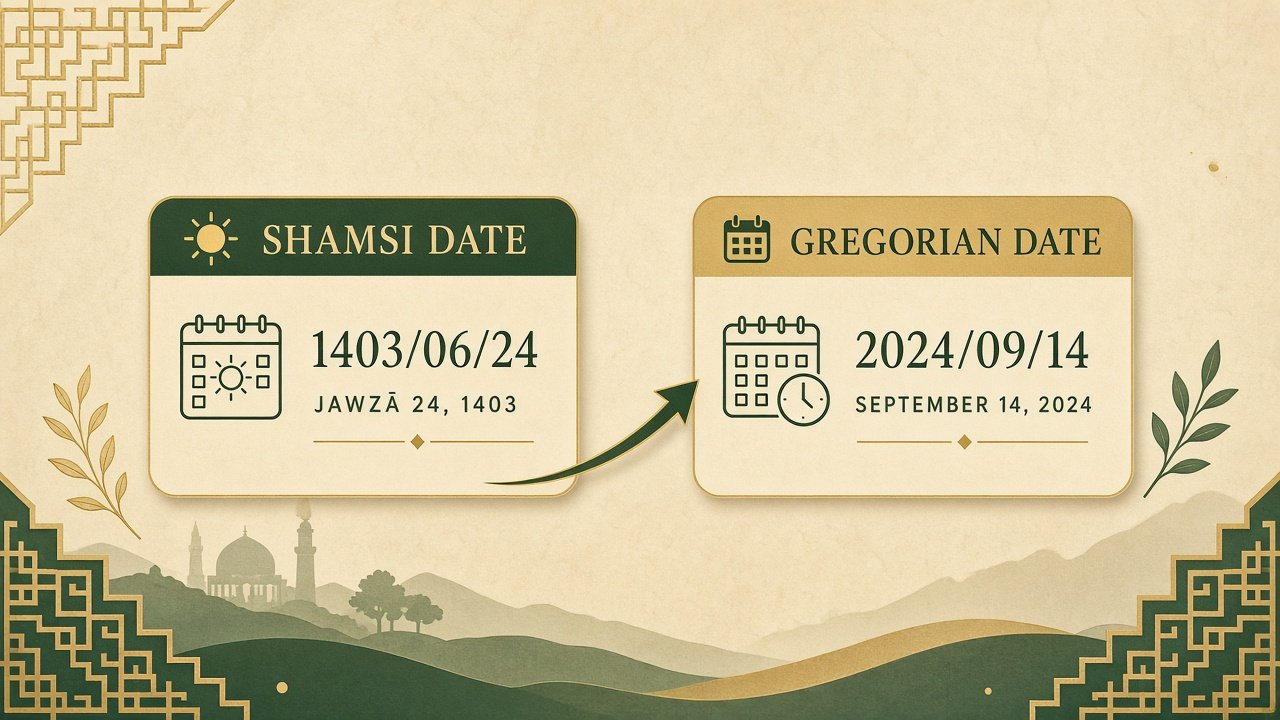
Converting an Afghan Shamsi date to Miladi means finding the same civil day expressed with Miladi day, month, and year. The result should match what an international calendar would show for that sunrise-to-sunrise day in the relevant timezone context.
People convert for birth dates on foreign forms, appointment letters, university applications, and payroll tools. A one-day error can look minor until a clerk rejects the file. This guide walks through a careful process using Afghan Date Converter and explains the rules that trip people up.
Collect the Shamsi day, month, and year clearly
Write down the Shamsi date in a consistent order before you touch any tool. Note whether the month is written as a name (for example Hamal) or a number (1–12). Confirm the year is a Shamsi year, not a Miladi year typed by habit.
If the source is a handwritten document, double-check digits that look similar and whether Dari numerals were used. Convert Dari digits to Western digits if needed so you do not misread ۴ as something else. When the document also shows a weekday, keep that note—it helps you spot conversion mistakes later.
Use the converter (recommended method)
Open the Afghan Date Converter home page. In the Shamsi panel, enter the day, month, and year. The Miladi panel updates to the matching Miladi date. You can also reverse the process: enter Miladi fields to recover Shamsi.
Do not round or “adjust by eye” after the tool returns a result unless you have a documented reason (for example, a form that rejects leap-day birthdays and asks you to pick an adjacent day—rare, but it happens). For ordinary civil conversion, trust the algorithmic result and copy it exactly.
- Enter Shamsi fields → read Miladi output
- Enter Miladi fields → read Shamsi output when checking reverse
- Use Age Calculator if you also need years/months/days of age
- Use Date Difference if you need the span between two known dates
Remember Shamsi month lengths
Shamsi months 1–6 normally have 31 days. Months 7–11 have 30 days. Month 12 (Hut / Kab) has 29 days in a common year and 30 in a leap year. If someone gives “31 of month 8,” that date is invalid and must be corrected at the source before conversion.
Miladi February has its own leap-day rules. A valid Shamsi date can land on 29 February Miladi in some years and never in others. If a form cannot accept 29 February, that is a form limitation—not proof the conversion failed.
Watch the year boundary around Nowruz
The Shamsi year changes around the March equinox, not on 1 January. Early Miladi March can still belong to the previous Shamsi year, and late March belongs to the new Shamsi year. Mental shortcuts like “always subtract 621 from the Miladi year” fail near that boundary and sometimes elsewhere.
When converting historical dates near Nowruz, pay extra attention. If two sources disagree by one day around the equinox, verify timezone and whether the source used astronomical Nowruz or a civil approximation. For most modern paperwork, a consistent converter is enough.
Verify with weekday or a second source
After conversion, check the weekday if your original document listed one. If the weekday disagrees, re-check the Shamsi inputs before blaming the tool. Also convert back from Miladi to Shamsi; you should recover the same Shamsi date you started with.
For high-stakes documents, keep a screenshot or printed note of both calendar values and the date you performed the conversion. That audit trail helps if a clerk questions the mapping months later.
Converting many dates at once
If you have a spreadsheet of Shamsi dates, use the bulk CSV converter or spreadsheet export tools on this site instead of converting one by one. Prepare a clean header row, keep one calendar system per input column, and review a sample of results before submitting an entire file to an institution.
Bulk workflows still need the same validation: no impossible day numbers, clear year type, and spot checks around Nowruz. Automation multiplies mistakes as easily as it multiplies correct results.
Summary checklist
Accurate Shamsi→Miladi conversion is mostly discipline: record the Shamsi triple correctly, convert with a dedicated tool, respect month lengths and Nowruz, then verify. Avoid informal offsets and handwritten guesswork when the date will appear on an official form.
When you need the mapping today, open the date converter, enter the Shamsi values, and copy the Miladi result. Use the related guides on month names and Shamsi vs Miladi if you are still learning which calendar a form expects.
Written for Afghan Date Converter by Khalid Danishyar. For feedback, visit Contact.