GuidesAfghan calendars
Hijri vs Shamsi: Lunar and Solar Calendars Explained
Clear differences between Islamic lunar Hijri and Afghan Shamsi (Solar Hijri): month lengths, year starts, and when each calendar is used in Afghanistan.
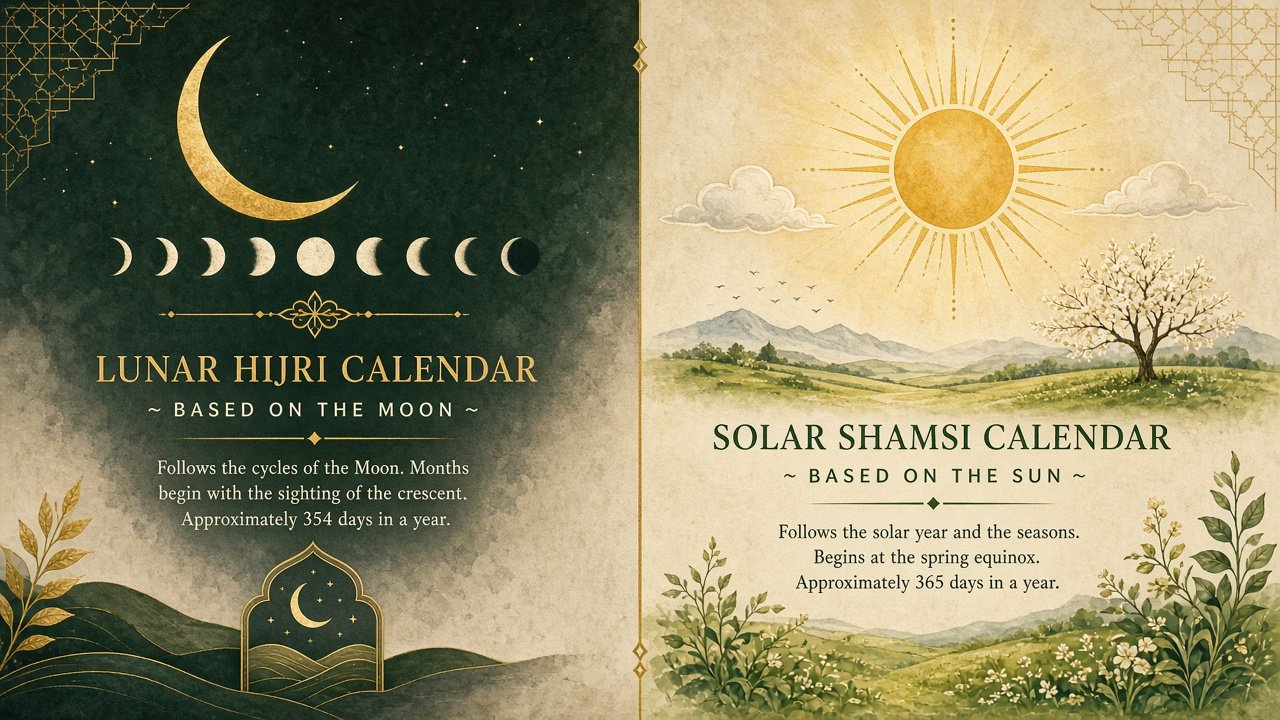
Why “Hijri” can mean two different things
In everyday speech, people say “Hijri” for more than one system. Islamic Hijri (lunar) counts months by the moon and is used for Ramadan, Hajj dates, and many religious observances. Afghan Shamsi is Solar Hijri: a solar civil calendar that still counts years from the Hijra era but follows the sun like Miladi does.
Mixing the two creates the most confusing conversion errors on this site’s topic. A “Hijri birthday” might mean lunar Hijri in one family and Shamsi in another. Always ask which system the document uses before converting.
Islamic lunar Hijri basics
Lunar months are about 29 or 30 days, and a lunar year is roughly 11 days shorter than a solar year. Because of that drift, Ramadan moves earlier through the Miladi seasons over time. Moon-sighting or calculated calendars can also differ by a day between communities.
On Afghan Date Converter, the Islamic calendar view and converter panels treat Hijri as this lunar system. Use it for religious date context, and pair it with prayer or Ramadan tools when you need times rather than only calendar labels.
Afghan Shamsi (Solar Hijri) basics
Shamsi months follow a solar year beginning around Nowruz. Month lengths are mostly fixed (31, then 30, then 29/30 in Hut). The calendar stays aligned with seasons, which is why civil life in Afghanistan leans on Shamsi even when religious life references lunar Hijri.
Dari and Pashto month names (Hamal, Sawr, and so on) belong to this solar system—not to the Arabic lunar month names (Muharram, Safar, Ramadan, and so on).
Side-by-side comparison
Use this quick contrast when explaining dates to someone new to Afghan calendars.
- Lunar Hijri: moon-based months; year shorter than solar; religious observances
- Shamsi: sun-based months; Nowruz new year; Afghan civil use
- Miladi: international civil default for passports and software
- Same “day” can have three labels—convert deliberately instead of renaming months
When to use which calendar
Choose lunar Hijri for fasting schedules, Islamic holidays keyed to the moon, and many mosque announcements. Choose Shamsi for Afghan civil documents, school years, and local planning. Choose Miladi for international travel and foreign institutions.
If a form simply says “Hijri date,” clarify Solar vs Lunar. In Afghanistan, government civil contexts usually mean Shamsi; religious contexts usually mean lunar Hijri. Ambiguous diaspora paperwork is where mistakes happen most often.
Conversion tips that prevent mistakes
Never map lunar month names onto Shamsi month numbers. “Ramadan” is not “month 9” of Shamsi. Convert through a tool that knows both systems, or convert each to Miladi as a bridge when comparing events.
For Ramadan planning, use the Ramadan times and Islamic calendar pages, then convert any needed Miladi or Shamsi equivalents for work leave. For civil birth dates, start from Shamsi or Miladi as written on the certificate—not from a lunar estimate.
Tools on this site for each system
The home converter shows Shamsi, Miladi, and Islamic Hijri together so you can see all three labels for one day. The Shamsi and Islamic year calendars let you browse month grids. The Solar Hijri guide explains Afghan month structure in more depth.
If you only remember one rule from this article: when someone says “Hijri,” ask “lunar or Shamsi?” That single question prevents most calendar mix-ups before you ever open a converter.
A practical check: if the month name is Arabic lunar (Muharram, Safar, Ramadan), you are in lunar Hijri. If the month name is Hamal, Sawr, Jawza, or another Dari/Pashto solar month, you are in Shamsi. If the document uses January–December, convert from Miladi. When handwriting is unclear, ask the issuer which system they used rather than guessing from the year number alone.
Year numbers can look similar across systems and still refer to different days. A Solar Hijri year and a lunar Hijri year both count from the Hijra era, but they do not stay aligned month-to-month. Treat the year label as incomplete without the calendar type and month name.
Everyday examples that show the difference
Example: planning leave for Ramadan. Your workplace may want Miladi dates for HR software, while the mosque announces lunar Hijri. Convert lunar dates to Miladi for the leave form, and keep Shamsi only if your local office still files leave in Solar Hijri.
Example: a birth certificate lists a Shamsi date. A foreign embassy form asks for Miladi. Convert Shamsi → Miladi with the site converter. Do not treat the Shamsi month number as if it were a lunar Hijri month number.
Example: a relative says “Hijri birthday.” Clarify Solar vs lunar. Many Afghan families mean Shamsi for civil birthdays and lunar Hijri only for religious commemorations. Recording the wrong system once can create years of mismatched paperwork.
Written for Afghan Date Converter by Khalid Danishyar. For feedback, visit Contact.